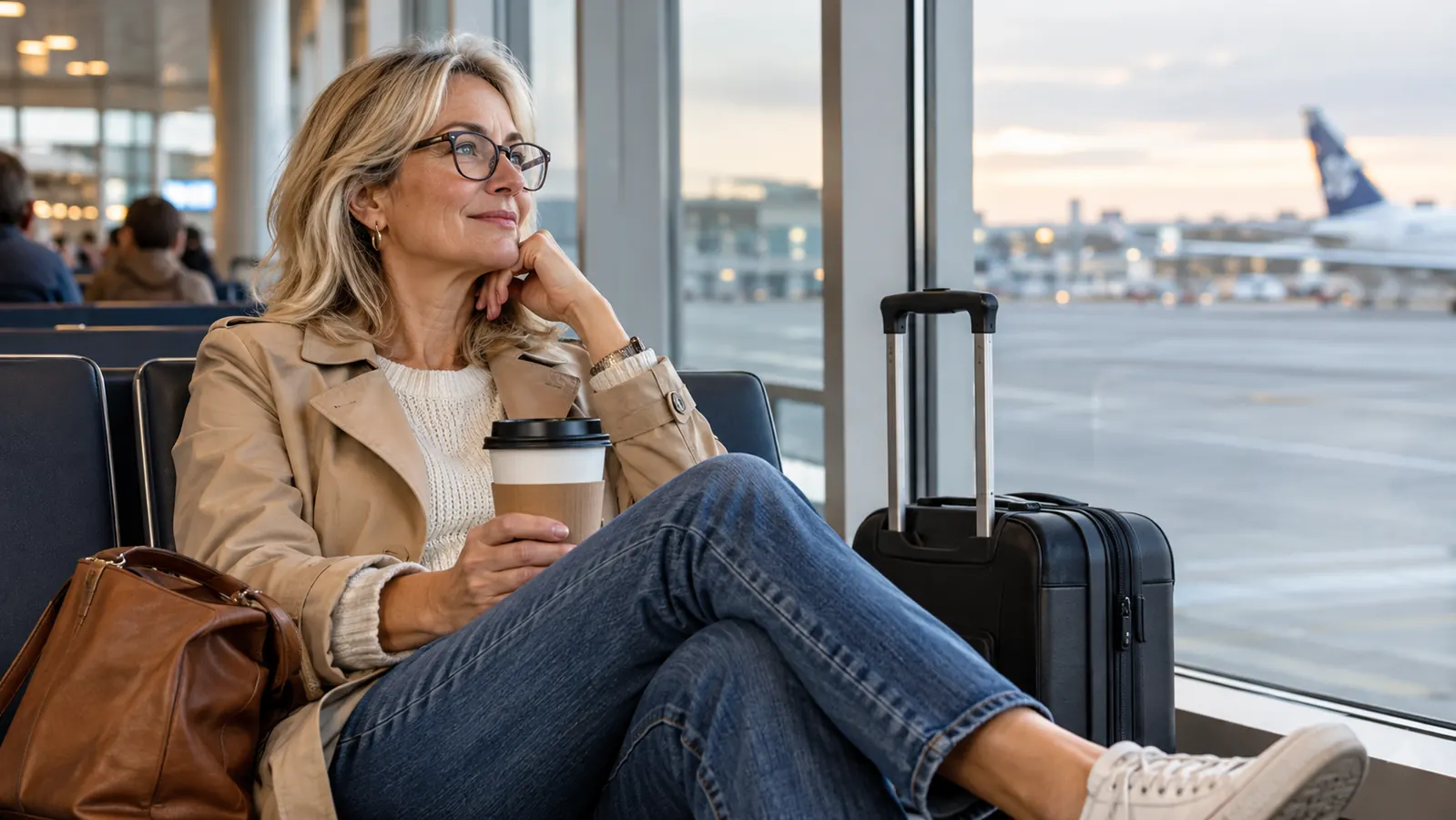
Every trip I take starts the same way. I lace my shoes loose at security, I settle into a window seat with my tote wedged under the seat in front of me, and somewhere over the middle of the country my ankles quietly stop being ankles. By the time Kate picks me up in Phoenix, my feet have gone up half a size and the shoes I walked out of the house in feel like they belong to someone else. I am 54, I fly four to six times a year, and for years I assumed swollen feet were just the price of going anywhere.
Here is what changed my mind. Two summers ago I watched a woman two rows up pull a pair of compression socks out of her tote at cruise altitude, put them on with the calm of someone who had done it a hundred times, and then stand at the gate looking like she had been sitting in a chair at home. She was not an athlete. She was not younger than me. She had simply figured out something I had not. I ordered the CHARMKING three-pair set at 15-20 mmHg the week after I got home, and I have not flown without them since. This is the routine I use, in the order I use it.
One pair lives in my tote, one in the roller, one in the wash
CHARMKING compression socks, three pairs, 15-20 mmHg, 85% nylon and 15% spandex, pull-on, machine washable. That is the whole system, and it fits in the outside pocket.
Amazon Check today's price on Amazon →Step 1: Pick your compression level before you pack, not at the airport
The number on the package is the whole ballgame, and it is the thing most people never look at. Compression is measured in millimeters of mercury, and that range tells you how much squeeze you are getting. The CHARMKING set is 15-20 mmHg, which sits in the mild-to-moderate range. That matters on a long flight because it is firm enough to feel like it is doing something on hour four, and gentle enough that you are not fighting with it in an airplane bathroom.
What you want to avoid is the pair you bought because the pattern was pretty. A sock in the 8-15 mmHg range is a nice sock. It is probably not going to do a lot for a four-hour flight to Phoenix or a nine-hour one to Europe. At the other end, 20-30 mmHg and above is a firmer garment people use under medical advice, and that is not something I would try for the first time in seat 14C. For a traveler with no diagnosis and a normal flight schedule, the middle is where I would start, and 15-20 is the middle.
The other number that matters is the pair count. Three is the right number for me, and it is not an accident. One goes in the tote, one goes in the roller, one is in the laundry. When you travel four to six times a year, three pairs means you are never doing a hotel sink wash at ten at night because you forgot to pack the only pair you own.
Step 2: Get the size right once, then stop thinking about it
Sizing is where people give up, and I understand why. Compression socks are not forgiving the way a scarf is forgiving. Too small and you will spend the whole flight aware of your calves. Too big and the fabric bunches at the ankle and does nothing useful. The CHARMKING set comes in a Large to X-Large range, so the question is not which of nine sizes to choose. The question is your calf circumference, and you should measure it at the widest point, standing, with a soft tape, before you order anything.
I measured mine on a Tuesday morning, wrote the number on a sticky note, and left it in the drawer with my passport so I would stop re-measuring it every year. If your number lands at the top of the range, size up. A compression sock that is slightly loose still helps. One that is slightly tight is the reason people decide compression socks are not for them and go right back to swollen ankles.
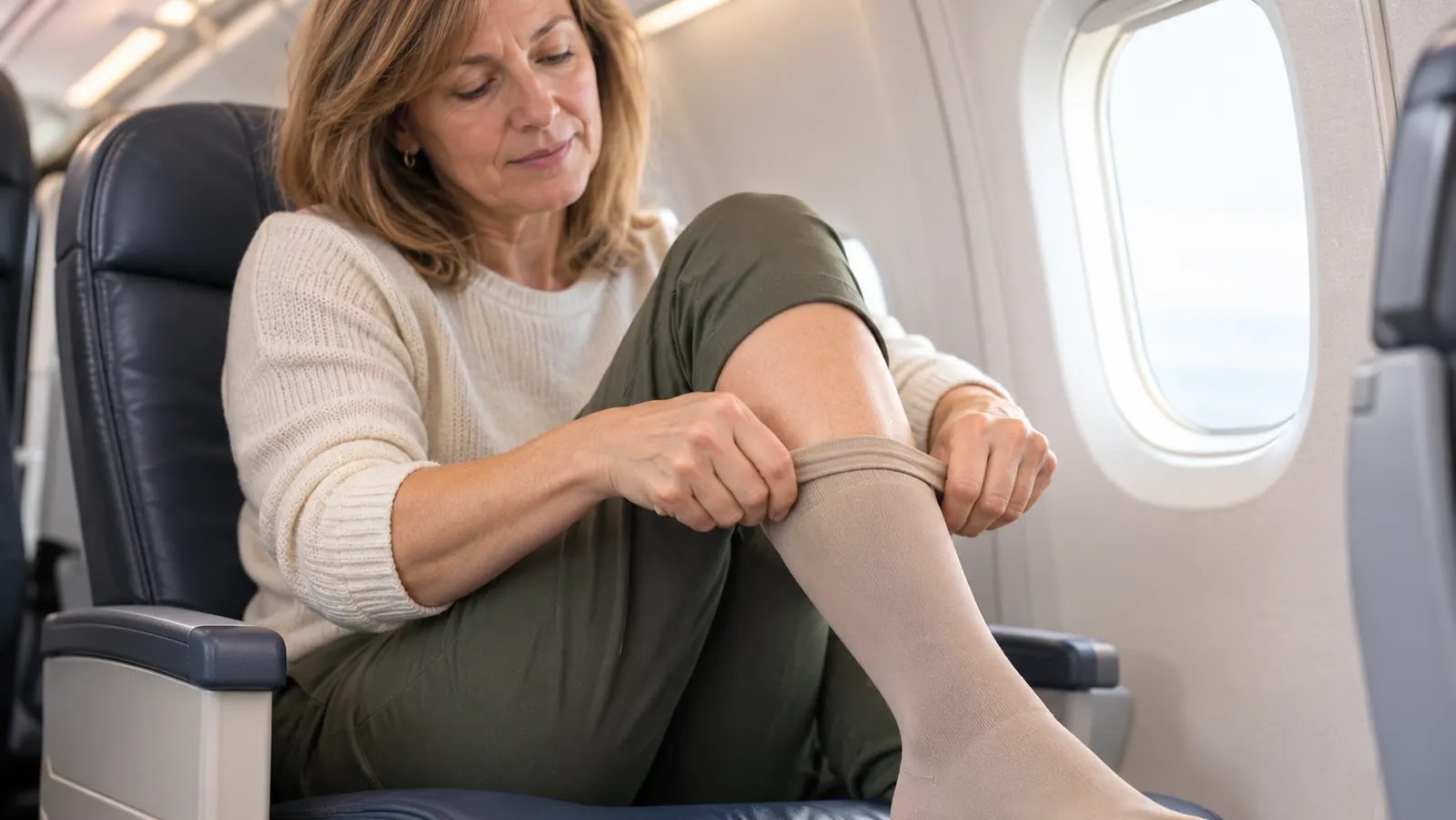
The other fit detail I care about is the closure. These are pull-on. No zipper, no hook and loop, no little fastener that catches on the lining of your tote. That sounds like a small thing until you have tried to work a zipper sock closed in a seat that reclines eleven degrees. Pull-on means you can put them on in a departure lounge chair without turning it into a production.
The first trip I wore them, my shoes still fit when I got off the plane in Phoenix. That had not happened in years.
Step 3: Put them on before you leave the house, not at altitude
This is the single change that made the biggest difference for me, and it has nothing to do with which sock you buy. Swelling starts before the plane does. It starts in the car, in the security line, in the two hours you spend sitting in the gate area because you are a person who gets to the airport early. If you wait until the seatbelt sign goes off to put them on, you are already behind. I put mine on at home, after my shower, before I get dressed.
In practice that means you sit on the edge of the bed, roll the sock down to the heel the way you would a heavy winter sock, get your foot in, and work it up in stages instead of yanking. Dry skin, and no lotion right before, because lotion makes the fabric drag. Then stand up and check that the top band sits below the crease of your knee and is not rolled down. A rolled band presses in one place, and it will leave a mark you can feel for an hour.
If you are flying in the afternoon, put them on before you leave for the airport. The other half of this step is the shoe. If the sock is on but the shoe is tight, you have solved nothing. I wear the same roomy lace-ups on every flight and I loosen the laces before I sit down, which takes four seconds and is worth more than it sounds.
Step 4: Move on a schedule, not when you happen to remember
Compression helps, but it is not a replacement for circulation. The sock squeezes, your calf muscles pump, and the two together are what keep fluid moving. Sitting perfectly still in a good sock is better than sitting perfectly still in a bad one. It is not as good as getting up. So I move on a schedule, and the schedule is roughly once an hour, timed to the seatbelt sign rather than to my memory.
My version is unglamorous. Ankle circles, ten in each direction, done under the blanket while the movie plays. Twenty heel raises with the balls of my feet on the floor. Then, when the aisle is clear, one walk to the back of the plane and back, which takes about four minutes and is the only exercise I get all day. On the flight to Phoenix that is three or four walks. On the flight to Europe it is more like eight.
One practical note. If you are choosing seats anyway, an aisle seat is worth more to me than a window, and I say that as someone who loves the window. Being able to stand up without climbing over two strangers is the difference between taking the walk and skipping it. Book the aisle, wear the socks, and let the window go.
Step 5: Handle the arrival, the washing, and the return leg
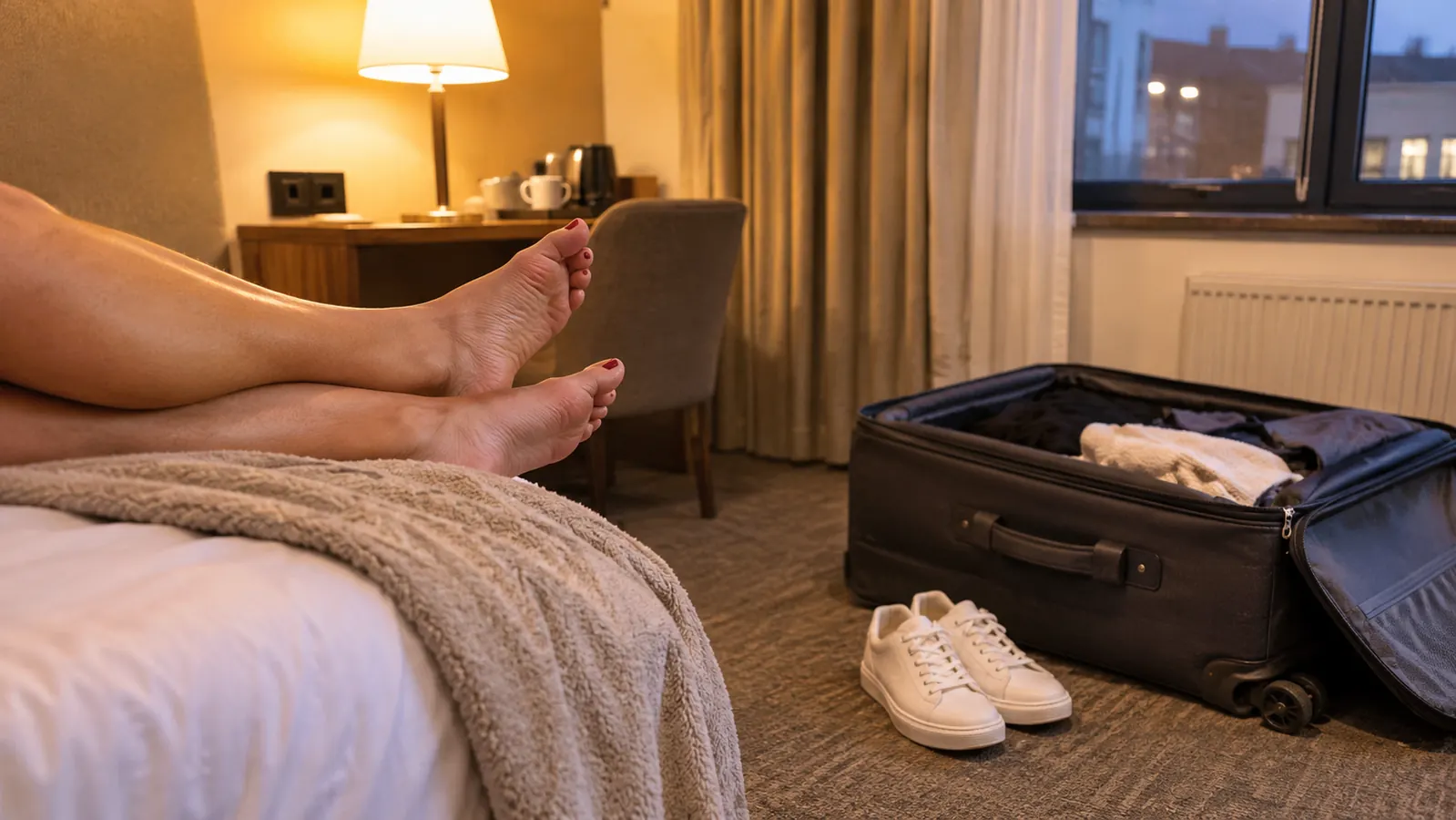
Arrival is where most people quit. They peel the socks off in the jet bridge, stuff them in the tote, and do not think about them again until the flight home. I do the opposite. I keep them on until I get to the hotel or to Kate's kitchen, take them off there, and put my feet up for ten minutes with a pillow under my calves. Then I hand wash that pair in cool water, hang it over the shower rod, and it is dry by morning.
Which brings me back to why three pairs is the right number. The CHARMKING set is machine washable, 85% nylon and 15% spandex, and mine does go through the machine at home on a gentle cycle inside a mesh bag. I hang them to dry instead of putting them in the dryer. Heat is what wears out spandex over time, and a sock that has lost its spandex is just a tight tube of fabric with no squeeze left in it.
On the return leg I put a fresh pair on before we leave the hotel, not at the airport, because the same rule applies in reverse. The last thing I do before I zip the roller is check that there is still one clean pair in the tote. That check has saved me twice, once on a road trip around Lake Michigan where the drive home was eight hours, and once in a hotel in Dublin where the laundry situation was not what I had hoped.
What Else Helps
The socks are the main event, but they are not the whole routine. Water first. I bring an empty bottle through security and fill it at a fountain past the checkpoint, and I drink more on the plane than I would at home, because the cabin air is dry and dehydration makes everything worse. Second, shoes with room. I fly in the loose pair, and I do not wear anything with a stiff heel or a strap across the instep on a travel day.
Third, salt. Airport food is salty and I love it, but a big pretzel and a bag of chips before a four-hour flight is the reason my rings are tight by landing. Fourth, feet up when you get there. Ten minutes with your heels on a pillow above heart level does more than an hour of sitting in a chair with your feet flat on the floor. None of this is complicated. It is just a list, and lists work better than willpower on a day when you are tired and hungry and far from home.
Fifth, and this is the one I wish I had figured out at 40 instead of 50: buy the socks before you need them. The CHARMKING set lives in my travel drawer now, next to the adapters and the sleep mask, and I never have to think about it when a trip comes up. That is the whole trick. Take the decision out of the travel day and put it in the drawer.
The pair I stopped getting off the plane without
Three pairs, 15-20 mmHg, pull-on, machine washable, 85% nylon and 15% spandex. One in the tote, one in the roller, one in the wash.
Amazon See the 3-pair set on Amazon →