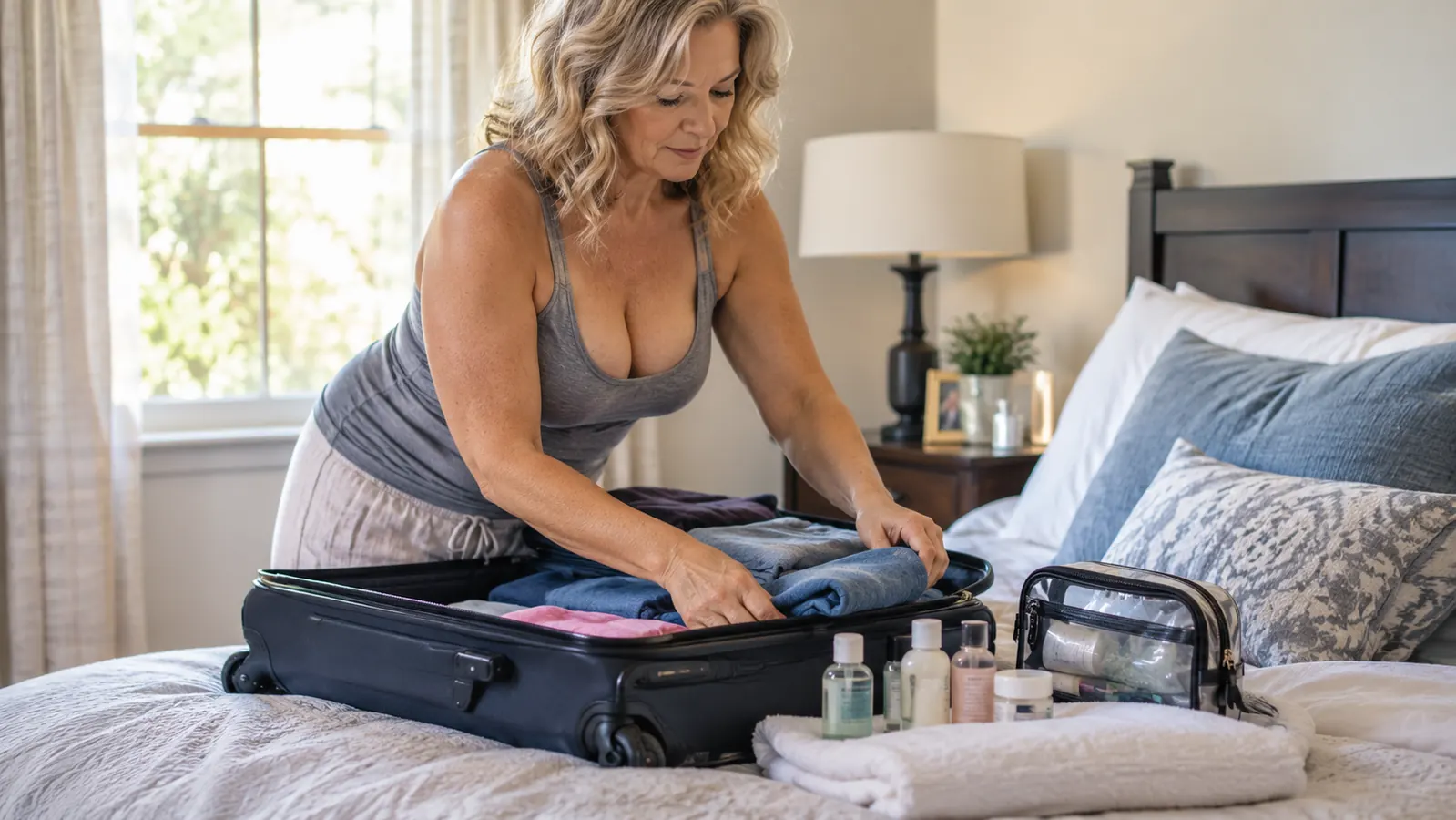
There is a specific kind of tired that comes from standing in a hotel bathroom at eleven at night, rinsing shampoo out of a carry-on because a bottle gave up somewhere over the Midwest. I have lived that. Twice. The second time involved conditioner and a paperback, and I still have opinions about it.
For years I assumed I was simply bad at packing. I was not. I was buying the wrong bottles. The pretty ones with the pump tops and the little printed labels are built for a shelf, not for a bag that gets shoved under a seat with a foot. Once I switched to silicone squeeze bottles with a proper cap, the mess stopped. The set I use now is the Tocelffe 18-piece travel bottle set, and I have taken it on enough trips to know exactly where it works and exactly where it needs a little help from me.
The set I stopped shopping around for
18 pieces, silicone bottles in 10 ml, 30 ml and 90 ml, plus a toiletry bag that earns its place in the tote. This is the one that has been through a dozen trips and is still sealing.
Amazon Check Today's Price on Amazon →Why Travel Bottles Leak in the First Place
Three things go wrong, and none of them is a mystery. The cap seal fails because it is a single thin gasket that deforms after the third squeeze. The bottle body cracks at the shoulder because hard plastic does not flex when the cabin pressure changes. Or the bottle was filled too full, so the product has nowhere to expand into and it pushes past the seal instead.
Fix all three and the leaks mostly stop. Silicone handles the flex. A layered cap handles the seal. Leaving headroom handles the pressure. That is the entire method. The five steps below are just how I do it in practice, in the order I do them, on the day before I leave.
Step 1: Start With the Right Bottles, Not the Pretty Ones
I have bought the pretty ones. The gift set with the little labels and the pump tops. Two of them cracked in the bottom of my tote between Detroit and Phoenix, and one pump leaked enough conditioner into my makeup bag to ruin a powder compact I had owned since 2019. Pretty is not a packing specification.
Here is what actually matters. A travel bottle has to be squeezable, it has to seal at the cap with more than one layer of protection, and it has to have an opening wide enough that you can get thick product in and old product out. The Tocelffe set hits all three. The bottles are silicone, the caps are built with a three-layer leak-proof design, and the mouth is wide enough that I can fill a 90 ml bottle with night cream using the back of a teaspoon and nothing else.
The set is 18 pieces and includes a small toiletry bag, with silicone bottles in 10 ml, 30 ml and 90 ml. That spread matters more than it sounds. The 90 ml bottles take my shampoo and conditioner for a week. The 30 ml size is right for body lotion and cleanser. The 10 ml size is for the things you only need a thimble of, like serum or cuticle oil. Getting the sizes matched to the products is half the battle, and most cheap sets give you a row of bottles the same size and call it done.
The first set I ever owned was six identical bottles, and every one of them was wrong for its job. The shampoo ran out on day four of an eight-day cruise and I spent the back half of that trip washing my hair with hotel bar soap. The serum bottle was so large I was still using the same fill a year later, which tells you something about how much serum a person actually needs for four days. When the bottle sizes match the products, you pack less and you stop rationing conditioner in the shower.
Step 2: Fill Them With Headroom, Always
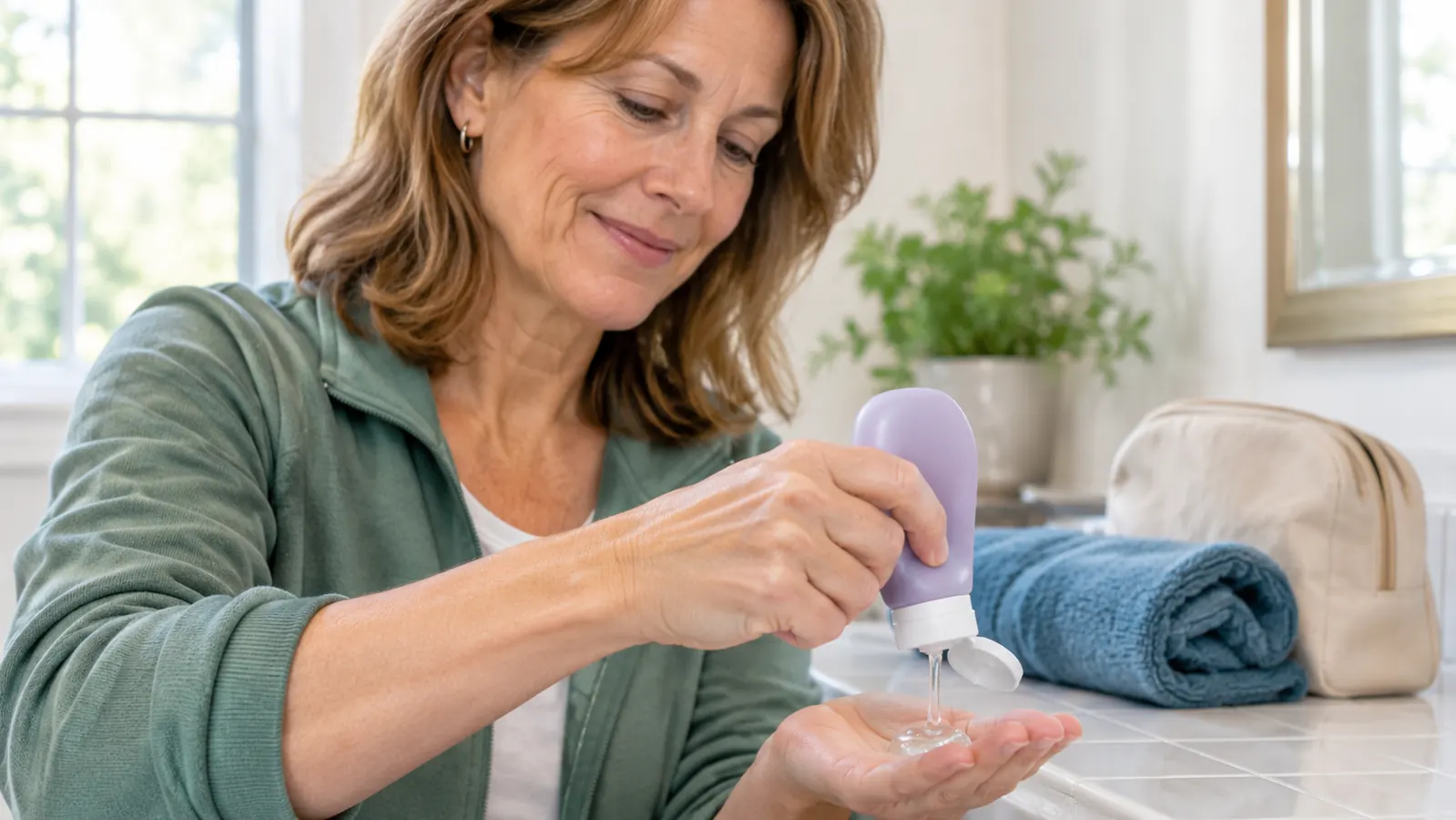
The mistake almost everyone makes is filling the bottle right up to the threads. Silicone flexes, and a full bottle has no room to flex into. On a flight, cabin pressure drops and whatever air is trapped in the product expands. If there is a pocket of air at the top, that is where the expansion goes. If there is not, it goes out through the cap and into your bag.
I fill to about three quarters, then squeeze the sides once before I cap it. That pushes the product up and forces the extra air out, and you can watch it happen through the silicone. Cap it while it is still slightly compressed and let it spring back. That small amount of suction is what holds the seal tight against the cap for the next eight hours.
The first time I tried this I did the opposite on purpose, to see how bad it could get. I filled a 30 ml bottle of night cream to the very top before a flight to Phoenix. It got bad. By the time we landed there was a ring of cream sitting in the cap threads and the inside of the toiletry bag looked like a small crime scene. That was the trip that taught me the headroom rule, and I have not overfilled a bottle since.
Thick products need more room than thin ones. Shampoo and conditioner are forgiving. A heavy night cream in a 30 ml bottle wants more headroom than you would guess, because it traps air when you scoop it in. I use the back of a teaspoon for creams, press it down to work the bubbles out, and only then cap it. It adds thirty seconds and saves a whole outfit.
Step 3: Pressure-Test Every Bottle Before It Goes in the Bag
Before anything goes into a bag, it gets tested. Not a gentle test. A mean one.
Cap the bottle, then squeeze it hard enough that the silicone bulges. Hold it there for a count of five. Then turn it upside down and shake it twice over the sink. Then lay it on its side on a paper towel for ten minutes, which is how a slow weep shows up. If the paper towel is dry, that bottle has earned its place in the bag.
The last part of the test is the one that actually predicts what happens in a carry-on. Put the capped bottle in the toiletry bag, close the bag, and press down on it with your palm the way a duffel presses down on everything at the bottom. A bottle that survives that will survive a flight. One that does not was never going to make it, and better to find out on your own counter than in a hotel in Phoenix at eleven at night.
I run the whole test the night before I leave, after the dishes are done, with everything laid out on a dish towel beside the sink. The squeezing and shaking takes about fifteen minutes. The ten flat minutes on the paper towel is time I spend packing socks. Dan has learned not to ask what I am doing at the kitchen counter at nine o'clock with a paper towel and a row of small bottles.
Step 4: Pack Them Upright and Give Them Their Own Pouch
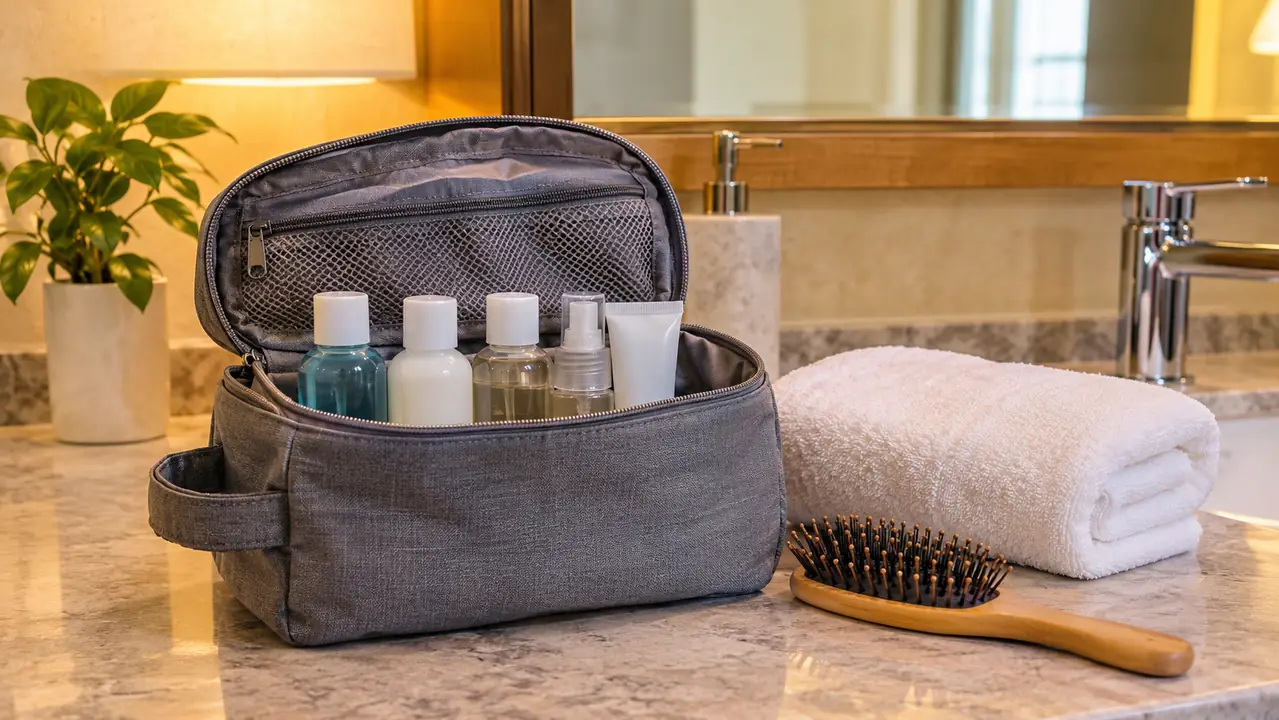
Pack them upright. This sounds obvious and it is the step people skip, because by then you are tired and you just want the bag zipped so you can go to bed.
The Tocelffe set comes with a small toiletry bag, and I use it as the bottle bag rather than as a general makeup bag. Bottles stand up in it, and the bag goes in the top layer of my personal-item tote, not the bottom of the roller. Nothing heavy sits on top of it. My tote goes under the seat in front of me, which means it never gets crushed by somebody else's suitcase in an overhead bin.
Fill the gaps so nothing can slide. A bottle that has room to move will end up on its side by hour two. I tuck rolled socks or a hairbrush alongside so the bottles stay vertical, and I keep the bag zipped even when I am only carrying it from the bed to the suitcase. The one time I left it open on the bed, a 30 ml bottle of cleanser went missing and turned up in a shoe.
Step 5: Wash Them the Day You Get Home
Empty them when you get home. Not the next day. The day you get home, because otherwise they sit in the closet for six weeks and whatever is left in them turns into something you have to scrub with a brush and a bad attitude.
Hand wash only, warm water, a drop of dish soap, and a small bottle brush for the 90 ml size. Rinse until the water runs clear, then stand them upside down on a dish towel with the caps off and leave them overnight. A bottle capped wet grows a smell that no amount of washing gets out. I learned that with a 10 ml bottle of face oil that had to go in the trash.
Do not put them in the dishwasher, even on the top rack. The heat is unkind to silicone and the small caps end up in the bottom somewhere near the heating element. Hand washing takes four minutes. Mine is in its second year of regular use and the caps still seal, which is more than I can say for any of the hard plastic bottles I used before these.
The bottle brush lives in the same drawer as the dish towels so it does not wander off. That sounds fussy until you have tried to rinse a 10 ml bottle with your finger and a prayer, and then it sounds like the most sensible thing in this article.
What Else Helps
Buy a second set and keep one packed. This is the single biggest time saver I have found. One set lives in the toiletry bag in the closet, already full. The other goes through the wash cycle. When I get home I swap them and the bag is ready for the next trip. Packing for four days at my daughter's place takes me twenty minutes now, and most of that is deciding which shoes.
The two-set habit started by accident. I bought a second set before a road trip around Lake Michigan in September because I did not want to be emptying bottles at midnight the night before we left. Two days into that trip I realized I had not thought about shampoo once, not once, and that was the end of last-minute toiletry packing for me.
Know the limits so you are not guessing at the security line. The 90 ml bottle is just over three ounces, which is under the 3.4 ounce limit for carry-on liquids in the United States. The whole 18-piece set fits in a quart bag with room left for deodorant and toothpaste. On road trips with Dan I do not bother with the bag limit at all. If we are driving, the full set goes in the door pocket and nobody says a word about it.
Do not decant anything you only use once a week. I stopped packing products on a schedule that does not match the trip. A three-day trip does not need a 30 ml bottle of exfoliant. It needs cleanser, moisturizer, sunscreen, and the two things I actually reach for in the morning. The empty space in the bag is worth more than the bottle that never gets opened.
The last thing I do is set the toiletry bag by the front door next to my glasses case. If it is by the door, it goes in the tote. If it is still upstairs, I will remember it somewhere around Ann Arbor, and then I will be buying shampoo at a drugstore for hotel prices.
A dozen trips on the same set. The only leak I have had was a bottle I overfilled on purpose, to see what would happen.
Pack it once and stop thinking about it
Silicone bottles in three sizes, three-layer leak-proof caps, a wide mouth that takes thick cream without a funnel, and a toiletry bag to hold the whole thing upright in your tote.
Amazon Check Today's Price on Amazon →